


Episode Description
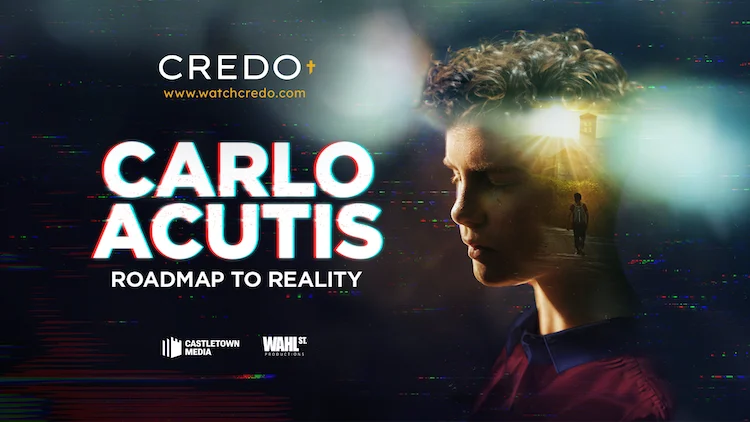
Ahead of the feast day of St. Carlo Acutis next week, producer David DiCerto joins us to look at his hit documentary, Carlo Acutis: Roadmap to Reality, and why the Church’s first millennial saint offers such a powerful example for young people navigating today’s digital world. He reflects on Carlo’s remarkable ability to use technology without becoming consumed by it, and shares how schools and parishes across the country can host their own feast day screenings of this landmark film.
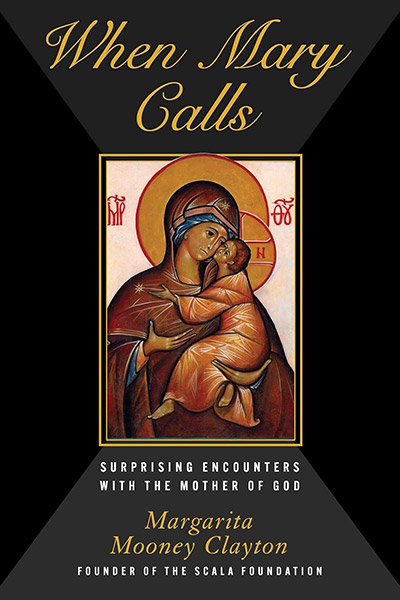
Plus, we celebrate the Marian month of October with Margarita Mooney Clayton as we explore the enduring power of the Rosary. She discusses her new book, When Mary Calls: Surprising Encounters with the Mother of God, drawing on personal experiences and extraordinary stories of faith. She reflects on Mary’s enduring maternal presence and why her example of compassion, trust, and perseverance speaks so profoundly to our modern world.
The team wraps up by examining how the lives of St. Carlo Acutis and the Blessed Virgin Mary remind us of a timeless truth: that holiness is found not only in extraordinary moments, but also in the everyday choices that bring us closer to God.

Catch the show every Saturday at 7amET/5pmET on EWTN radio!
And don’t forget to subscribe to TCA’s daily media roundup for smart Catholic news and commentary delivered straight to your inbox.
Bios
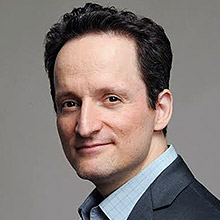
David DiCerto is Director of Content Strategy at Castletown Media and producer of the acclaimed documentary Carlo Acutis: Roadmap to Reality, which explores the life of the Catholic Church’s first millennial saint and the challenges of faith in the digital age. A New York City native with more than two decades of experience at the intersection of faith, media, and the arts, DiCerto served in leadership roles at the Archbishop Fulton J. Sheen Center for Thought & Culture, co-hosted and produced the award-winning movie-review program REEL FAITH, and worked as a media reviewer for the U.S. Conference of Catholic Bishops. His work with major studios and platforms includes SONY, Paramount, Warner Brothers, CBS, National Geographic, Amazon Prime and Netflix among others. An award-winning film critic who hosts The Catholic Lens, he continues to bring faith-informed storytelling to audiences through film, TV, and digital content. He attended Fordham University in New York City where he majored in media studies with a concentration in film. He lives in Manhattan with his wife and son.

Margarita Mooney Clayton is an author, public speaker, and professor at Princeton Theological Seminary. She is founder of the Scala Foundation, dedicated to transforming culture by promoting beauty and joy through the arts, liturgy and higher education. She is a research fellow in theology and the arts at Blackfriars Hall, Oxford University, and a widely respected author who writes frequently on faith, culture, beauty and education with an emphasis on sacred art and Christian tradition. Her writing has appeared in academic publications and journals and cited in the New York Times. Her new book, When Mary Calls: Surprising Encounters with the Mother of God, explores how Mary continues to guide souls through suffering, beauty, healing, and spiritual renewal. She earned a Bachelor’s in Psychology from Yale University and a Master’s and Ph.D. in Sociology from Princeton University. She has taught in sociology programs at the University of North Carolina, Chapel Hill, Yale, and Princeton.
The following transcript is machine generated.
| Ashley | Welcome to conversations with consequences here on EWTN radio. I'm your host, Ashley McGuire, and with the feast day of Saint Carlo Acutus coming up on October 12th. Schools and parishes across the country are looking for meaningful ways to engage young people and families around this powerful saint. And today, we're joined by David DiCerto. He's the producer of Carlo Acutus Roadmap to Reality to discuss the film. Carlos message for the digital age and how local communities can easily host their own feast day screenings. David, welcome to the show. |
| David DiCerto | Thank you for having me, Ashley, and thank you for this opportunity to talk about Saint Carlo and the film. |
| Ashley | You know, I have a special place in my heart for Saint Carlo Acutus, even though I'm not really young anymore. I have a teenage daughter, and she has a really implemented Carlo Acutus toolkit, and it's just been unbelievable to see how it's transformed her life. But you've produced this film about this millennial saint, and can you talk about how the film addresses the tension between a our modern digital culture and authentic spiritual life for today's young people? |
| David DiCerto | Sure. Well, well, first of all, you're not alone in your your affection for Carlo. It seems so many people. And we've learned that in the process of making this film, you know, young people, old people, Catholics, even non-Catholics really are drawn to Carlo. And I think what's interesting about the approach we took is it's not a straight biography of, of Saint Carlo. I mean, obviously Saint Carlo lived a beautiful and very, you know, his witness of his faith and sanctity is beautiful. But we wanted to, in addition to telling the story of Carlos life, really examine what Saint Carlo had to say to our particular, you know, moment. One of our favorite lines in coming up with the film was G.K. Chesterton. G.K. Chesterton said that God does not give every age the same saint. He gives each age the saint that it needs as an answer or an antidote for the problems that ail that particular age. And in making this film, we really felt that Carlo was that antidote. And for many reasons, you know, you know, most specifically, he is known as, the millennial saint, God's influencer. So he's he's associated with digital technology. But really, one of his most famous quotes is that we're all born original, but many of us die copies. And in thinking about that quote, we really started realizing that, there's a lot of problems and concerns with digital media today, but one of them is that it encourages people to imitate, you know, for all its lip service to sort of self-expression and, and this sort of hyper individuality, social media and, and virtual reality really encourages conformity more than anything else. And we end up copying what's just fashionable out there, particularly young people and teenagers. So what's in Carlo does is he suggests to say that if you're going to copy anything, don't copy what you think is fashionable out there. Copy the ultimate source, the source and summit of reality, which is Christ. And Carlo is also associated with a very strong Eucharistic devotion. And what he said was social media promises connection, which is kind of a a much diluted version of what the human heart really wants, which is communion. And by by following Saint Carlos example, it really encouraged us not to seek just this sort of fake connection that social media offers, but a real communion with Christ. And by with that real communion, we really find the original purpose of our lives, the original beauty in which we were created. And we stopped chasing, just imitating other people. And we we hopefully become the person that that God created us to be. |
| Ashley | Yeah, that's really fascinating. I mean, it's it's it's so true that humanity is sort of hardwired to conformity. And it does seem like technology and social media really supercharge that instinct or give it a speed that is, alarming. But so, Credo Studios has created a screening of this design for schools. I love that my, my daughter's school just hosted a separate Carlo Acutus event. So can you talk about this, this screening model and the study guide that comes with it and what you're hoping that will achieve in classrooms across the country? |
| David DiCerto | Sure. Well, we never produced the film just to sort of be a one off screening experience. We really wanted it to be, a jumping off point for a much larger conversation. So Credo Studio is our digital platform, Credo Studio. And we've tried to make it as easy as possible for church groups or school communities. Really, all you have to do is go to Kratos studios.com and click on host a screening. And there's two options. So you could either have a groups schools, parish groups could either have a ticketed event where you know, you set the price for your ticket. There is a minimum charge. But the beautiful thing about that is half the ticket price goes back to the host community. So if you want to host a screening, half of whatever you make would go back to your parish group. Go back to your school community. Credo studio takes care of the ticketing, sets it up, and provide you with all the marketing kit that you need to market that screening, or if you don't want to charge tickets and the host organization, the parish or the school just wants to make this, screening available to its members. The host group can, rent a license for the film, and it's there's tiered pricing depends on how many people you want to share it with. And then the host can just share that, that that link free of charge to its members for youth screenings or for classrooms of up to 99, there's just 99 people. There's a flat rate of $99. And for those screenings, we worked really hard with the University of Notre Dame's McGrath Institute to create a really thought provoking, companion guide, which you can use for classroom discussions or even parish discussions to really encourage people, invite people into a larger conversation about, you know, the message that Carlo is trying to speak to our modern world. |
| Ashley | So just getting into the nitty gritty because as soon as we're done talking, I'm going to send this to my both my school's principals. What kind of tech do you need? Is this, like, just a projector and a and a laptop? |
| David DiCerto | Yeah. I mean, it depends on what type of screening you want to set up. But, you know, we make the link available as the downloadable link. So if you want to project it on to a screen, but, you know, again for the host page screenings, if you want to share that link with up to number of guests, they can, you know, share that link with people as well. So it really depends on what type of screening the host organization wants to put together. I mean, obviously we encourage bringing people together because I think there really is a wonderful, communal aspect to not only experiencing the film, but that larger conversation around the film, which is really interesting because, the film, while it certainly sort of covers the biography of Saint by of Saint Carlo, it really is an exploration of this journey of 150 high school students from North Dakota, Catholic high school students who leave their technology behind and go on this pilgrimage to Italy, to Rome, and then later Assisi, where Saint Carlo, where his earthly remains are, are, are interred. And, you know, that transformation of what these young people go through on the script really provides, not only a beautiful but a very relevant framework for this conversation. And makes Carlo obviously very relatable to young people. |
| Ashley | So it's also available in fully dubbed Spanish. And that caught my attention because he's so popular in the English speaking world that I sometimes forget he was not. He didn't. I mean, maybe he spoke English, but he was Italian. But have you seen an interest in the Hispanic community in Carlo Acutus and in your film? |
| David DiCerto | Yeah. I mean, well, first of all, the two, the two miracles that were attributed to the intercession of Saint Carlo for his canon as they first his beatification and canonization. One was a young boy from Brazil, another a woman from Costa Rica. So there's obviously a very robust and devotion to Saint Carlo in the Latin speaking world. But what we found out from, you know, screening this film and making it available is there's devotions to Saint Carlo globally. We've had requests from obviously, Latin America and Europe, but also from Asia, Australia. It just seems everybody loves Carlo. |
| Ashley | That's wonderful. And also the film, I understand, was the highest grossing faith based documentary in the US theaters. That's extraordinary. And to what do you attribute that success? Because even even really compelling faith based movies often don't necessarily do well in theaters. |
| David DiCerto | Well, I mean, obviously a lot of it goes to, you know, I would give all the credit to, to Saint Carlo. Like I said, there's there's legions of people around the world, who have a great deal of affection for him. But what we found really interesting is we've even been approached by groups who are not necessarily Catholic, who want to screen the film because they understand, not only the important message that Carlo offers the world in terms of responsible use of technology, particularly among young people. But also the way he modeled that, you know, Carlo was a child of his age. He was born in 1991. Ironically, the year that the World Wide Web, was launched. But he always understood the proper use of technology. It's not lost on us. The irony of we're making a film about a young man who encouraged people to get off screens by encouraging people to get on screens to watch a movie about him. But Carlo also used technology. He created a, a incredible website about Eucharistic miracles. He had such a deep devotion to the Eucharist. But as Christoph says in the film, one of the people that we interview, he said Carlo used technology to get people off technology. So I think in this brave new world that we all find ourselves, particularly parents, are turning to Carlo and seeing in him not just a relatable model of sanctity, but just a relatable model of how to navigate this increasingly, you know, tech dominated world that we live in. |
| Ashley | What would you say? Because this is such a big theme right now for not just Catholic parents, as you point out, but all parents who are really struggling with the topic of technology. And, you know, I'm a mom of five kids. I have no exception. But what would you say are some of the key pieces of wisdom you know, that he offers to to parents and to teens who are trying to use technology in a more responsible and purposeful way? Intentional? |
| David DiCerto | Well, I mean, you know, one thing is just Carlo, even at a very young age, was was very self-disciplined, you know, and his his parents got him a some sort of a, you know, a gaming system. He had read an article about some of the, you know, negative effects of technology on, on youngsters. And he self-disciplined himself and said he was only going to use that that game system about an hour, you know, an hour a day or an hour a week. So part of it was just he understood that even at a very early age. But in, in making this film, one of the, I think one of the really moving takeaways, as I said, we followed a, a group of young teenagers on this pilgrimage to Italy. And one of the questions we had as, as a producing entity was, okay, they're going to leave their technology at a home, but what's going to happen, you know, a day or a week or a month? Once they're back, are they going to fall into that same trap? You know, the siren song of of doom scrolling and some of the youngsters actually voice that concern while they're there over in a CC and they're, they're they're kind of, have mixed feelings about returning home. And what that's going to mean about returning to that, that tech dominated lifestyle. And we had the pleasure of actually revisiting them a few months later back in North Dakota. And what was so, heartening was that, you know, some of them did go back to a modified use of technology, but there were some youngsters who said that it really was a transformative experience, that they didn't really go back to the same type of lifestyle they had been in terms of their technology using usage. And they attribute that to, you know, not only the time spent getting to know Carlo and obviously that that time spent in that deeper relationship with the Lord. But but one scene in particular from the film to me, really sums up the whole movie. It's kind of late in their journey. They're in a CC, they've already visited, Saint Carlos grave, and they're in this outdoor restaurant and they're just having fun there, being normal teenagers laughing, and it starts to rain. There's a clap of thunder and they all sort of laugh. And one of the students says, you know, we've been together so long as classmates that we never had these types of conversations. And until we left our technology at home, that life and the world just sounded more real. And that's kind of why we we have that subtitle Roadmap to Reality. Because, as you said, we're all hardwired for reality. And I think the students and hopefully young people who watch this film walk away with the same lesson, that by giving up technology or at least using it in a more responsible way, because Carlo again, did use technology, it doesn't take anything away from them. It actually led them into a deeper experience of reality. They gained something by, you know, as one of the presets. The less digital they became, the more real they became. And I and I really do think that that whole idea of appreciating a rainstorm, appreciating, laughing together, appreciating those kids that you had spent years with, but maybe you hadn't spent that same type of developing that, that interpersonal relationship. I think that's one of Carlos, real gifts to, to our age. And just the way he, he approached life in general, his mother said that many people see Carlo as that saint in sneakers, that that just ordinary young boy. And in many ways, he very was very much an ordinary young man. He played sports, he played video games, he had friends. But she also said he was extraordinary because he was a mystic. And that really made me ask myself, what does that mean? In our modern world, we all know what mystics kind of looked and sounded like in in medieval times and different points of history. But what does that mean today? And I think Carlo really offered us a simple roadmap. He it was just keeping your antenna tuned to something deeper. If you keep your antennas tuned to Christ in the Eucharist, then you see Christ all over the place. You see him in your friends and strangers and homeless people and nature. And suddenly grace is everywhere. And I think that's Carlos message and the secret to his mysticism. |
| Ashley | You know, you mentioned the the kids, kind of rediscovering, I don't know, reality in a more salient way. And there's on technology on, on X, there's been these videos, these nostalgic videos circulating of just kids in classrooms or at like lunch hall in the 90s and people saying, you know, we had no idea how good we had it because there's no phones, there's no technology and just, things that were actually probably naughty, like goofing off, passing notes. I mean, it's it's it's interesting that there's a nostalgia for that. But talk about this group of kids that you followed, which came first. Did they decide to make this pilgrimage? And you got the idea, let's follow them. Or did you propose the idea? Because it's an interesting, it's an interesting mechanism to bring Carlo Acutus kind of more light. |
| David DiCerto | Yeah, that's a great question. And it really is, you know, one of those providential moments. So we were, you know, we were in the midst of making the film, we were struggling from a narrative standpoint about how to enter the story, because any person is is a mystery that can never really be captured in one movie in 90 minutes. So we were trying to figure out the best way of entering into Carlos story, and we were actually our our one of the co-directors of the film, Tim Moriarty, who founded Castletown Media, was reaching out to the University of Mary in North Dakota because we had wanted to interview Monsignor Shea and and, in the midst of that conversation, the our contact at the University of Mary Jerome Richter had said, oh, by the way, I don't know if this would be of interest to you, but we actually happened to be leaving in a few days. I think it was like 2 or 3 days later on this pilgrimage, we're bringing 150 high school students. Would you be interested? And, you know, our response was like, would we be interested? This is perfect. Yeah, because not only is it allowing us to enter, you know, have that framework for telling the story of following these students, but then they told us that they had to as part of this pilgrimage. They had to leave all their technology at home. So we could not have asked for a better narrative framework for entering into Carlos story. And it really was providential. And at the end of the day. You know, the children, the students really made this film. |
| Ashley | Wow. Was there anything that you learned about Carlo when you were working on this film that surprised you or that you hadn't known before? |
| David DiCerto | You know, there's so many. Like I said, we could have made a dozen films about Saint Carlo, you know, emphasizing different aspects of his life. He lived a very short life, a tragically short life. But it obviously was just so. It was an extraordinary life. But again, it comes back to that idea of, of, of mysticism, but also just his sense of joy. You know, one of the stories that his mother tells in, in the, in the film and, you know, many people familiar with Carlos story will know this, this anecdote. But he loved nature and he loved animals. That's another similarity that he shared with his favorite saint, Saint Francis of Assisi, which is why he had requested for his earthly remains to be in a CC next to Saint Francis. But they were spending the summer with his grandfather, and they it was a seaside town, and they had always gone out on boats. And one day, the boat was just surrounded by dolphins. And he told his mom that before leaving on the the boat trip that day, he had asked Jesus to, you know, that he could see some dolphins. And his grandfather, who was kind of an experienced sailor, had said in his entire life he had never seen that many dolphins, you know, surrounding a boat. And it's just that sense of joy and, and, finding that joy in the, in the created world. Again, Chesterton has so many wonderful lines, but one that came to mind throughout the making of this film was that the world will never want for wonders, but just wonder. And I think that idea that we've lost, particularly in our in our increasingly technological age, we've lost that sense of wonder. We've lost that sense of of seeing miracles all around us. And that's what Carlo did better than any other. You know, a person that I can call to Mike, he saw the miraculous and the every day. And he saw it in every moment. He didn't he didn't have to do extraordinary things every moment of his life, whether he was with his friends, playing sports or helping out a classmate or, you know, just doing something small for a homeless guy that he passed on the street. That was a miraculous moment. And it it really came back to that, that beautiful phrase from the the medieval mystic that that sacrament of the present moment. Carlo lived every moment in that that sacrament of that present moment. And hopefully I can I can learn a little bit of that from having spent this time working on this film. |
| Ashley | Well, and it seems, I mean, what a wonderful, again device with following those students, because it seems like the challenge, you know, when you travel or go to holy places, even if you're in the moment, the the technology gives you this pressure to have to document it. You know, you just we had Theresa Tomio on the show and she's written extensively about religious pilgrimages. And she said it's a huge, detraction is that, you know, one of her first pieces of advice is do not bring your cell phone because you will spend the whole time working on trying to get the perfect picture instead of, you know, whatever spiritual thing it is that you're meant to be doing there. Well, so for our listeners who are maybe thinking, oh my gosh, this sounds like such an incredible thing, I'd love to have it at my school, but we're days away. What's your advice? Is it is it too late, or is can people still potentially get this kind of screening for their parish or for their school? |
| David DiCerto | Yeah, I mean, the process itself is is very simple. It could be you can you can fill in the very short form in a matter of minutes. So in terms of if they want to do it leading up to the feast or on the feast itself, there's still plenty of time. But beyond that, the film lives exists on our Credo Studio site. And, you know, we certainly encourage people to host screenings, whether, you know, leading up to the celebration of his feast day, on his feast day or any day after his feast day, we want to share this with as many people as possible. So, there's certainly no expiration date on telling Carlos story. |
| Ashley | That's a great point. Well, David, thank you so much for coming on today to tell us a bit more about behind the scenes of this movie you've done and how people can continue to be inspired and learn more about this saint truly for our times. David. Thank you. |
| David DiCerto | Thank you Ashley. God bless. |
| Betsy | We like to take a moment to thank all of our loyal listeners who tune in each week to conversations with consequences. As you all know, the Catholic Association is everywhere. We were on TV to cover the conclave and the election of the new Pope. We're in print, we're online, and we're on social media. We've just launched a new Substack to expand our media presence and offer more great content from a Catholic perspective. We're on X, and now we're on Substack for Catholic Conversations with TCA, where we're featuring exciting new interviews, commentaries, videos, and more featuring our fellows Ashley McGuire, Lee Sneed, and Betsy Fentress. And we'll be having guest columnists each week as well. Just recently, Ashley shared some little known facts about Saint Carlo Acutus. Lee Snead writes about her book and infertility titled Infertile But Fruitful, and explains why she decided to write the book. So many people had responded to her columns and podcasts on her journey toward becoming an adoptive mother that she felt called to write a full length book about it, and Betsy Fentress writes on hospitality and the Will to live, about a friend's father and a family friend with no relatives who were brought back to life by food, attention, and love. We hope you'll join to our Substack. It's free. You'll find it at Catholic Association Dot Substack. Com, and we'd love for you to join us in our continuing Catholic conversations. |
| Ashley | That's really the beauty of the clips is, you know, we don't turn away from the negative stories. We look at them, we analyze them in the clips, but we also help to draw out those hopeful stories that we're, you know, as Catholics called to reflect on and be a part of. And so we commend our clip service to all of our listeners. Every morning, the Catholic Association reviews all the latest news and sends our subscribers a carefully curated collection of the most important news of the day. Items are specifically selected for a smart Catholic audience like you. Don't let the world take you by surprise. Subscribe to our daily media roundup at the Catholic Association. Dot org. Thanks for. Reflecting on the. News of the week with us today. |
| Betsy | Welcome to conversations with consequences here on EWTN radio. I'm your host, Betsy Fentress. |
| Ashley | And I'm Ashley McGuire. |
| Betsy | And we're thrilled to have with us Margarita Mooney Clayton. Doctor Clayton is a professor at Princeton Theological Seminary and the founder of the Scala Foundation. She's also a research fellow in theology and the arts at Blackfriars Hall, Oxford University. In her new book, When Mary Calls Surprising Encounters with the Mother of God. She explores the contemporary and often miraculous influence of the Virgin Mary through a series of spiritual memoirs and interviews. Seven, to be exact, and is written as both a spiritual memoir and a theological exploration. Margarita, thanks for making time for us today. |
| Margarita Mooney Clayton | Lovely to see you again, Betsy. |
| Betsy | So your book has made a real splash. And what's interesting is you're being endorsed by both prominent Catholics like Scott Hahn and Dominican Father Lawrence Lew, as well as Protestants like Eric Metaxas and historian Peter Brown. To what do you attribute that both Protestants and Catholics are coming together to praise this book? |
| Ashley | Well. |
| Margarita Mooney Clayton | To put it simply, that Mary is alive and she's moving in the world right now in unexpected ways, which an historian like Peter Brown can recognize and call really an ancient healing. Well, reaching out to a desiccated culture, or which a former Orthodox turned Protestant, Eric Metaxas, can realize that skeptics have long questioned the place of Mary and Christianity, but she has been a presence with the saints and with the faithful. Mary has been close to the people of God since not just the birth of Christ and His crucifixion, but right there in acts of the apostles, generating hope in times of fear for the church and really binding the apostles and the followers of Christ together into a family. |
| Ashley | So I'm a Protestant who became Catholic and, like so many Protestants, got a little bit tripped up on some of the Mary ology and never really was against it and never really understood it. And as I was contemplating it, I went on a trip to Rwanda, where I was with a Protestant group, and we happened to join in a dinner with a Catholic pilgrimage group that was being led by Immaculate. And this was only like ten years after the genocide. And I told her I got to meet her, and I told her I was thinking about becoming Catholic. And she grabbed me and she started telling me about Our Lady of Cuba. And the people were actively having visions of her. And I know this is not one of the approved Marian places, but certainly it's it's being acknowledged. And then I also just had a group of women in my women's group come back from a and one of them stayed with one of the visionaries. I didn't realize there's people who are still having visions. So can you talk a little when you talk about how Mary is still alive? I think people think of these pilgrimage sites or this is kind of a thing of history, and we go and pay homage, but it's it's happening now. Can you talk about and in your book how you highlight some of these, these things that are actively happening to people with Mary right now? Well. |
| Margarita Mooney Clayton | As you mentioned, Ashley, there have been power apparitions of Mary Kibet and Rwanda, Our Lady of Zeitoun in Egypt, not to mention Fatma in Lourdes. And there have been countless reports of miracles and healings. However, in our Protestant brothers and sisters and keep in mind, I teach Protestants and all the work I do with Schola Foundation and the women's groups I lead. It's always been ecumenical. The hesitation when you talk about those apparitions as well. Can't there be? Can't people be fooled? Can't there be demonic influences or false apparitions? And look, if you look at the history of the Catholic Church, it's always been recognized that a personal revelation for Mary doesn't make it authentic or. But we don't want to fall into the error of therefore rejecting the possibility that Mary does have a personal message for individual people and for our culture. So in speaking with the Protestants who are in my book that had a surprising encounter with Mary, what I tried to work with them on, and part of the reason I thought that there two of the people I spoke to who were Protestant had a miraculous healing through Mary, and this was as much a shock to them as it is to listeners, because they weren't actually looking for it, but they recognized that there was a maternal embrace reaching them, in one case a spiritual healing and the other a physical healing. And they didn't know what to make of it. And they came to me as a Catholic not to publicize this private revelation that they had, but to ask, how is it that I, a faithful Protestant, can't tell you anything about Mary? And why doesn't my church ever mention this? And so they came to me asking, this is part of what the book is trying to do, is to show that these miraculous healing, which these young Protestants experience through Mary, bound them even tighter to the church and to Scripture, but in ways which they has Protestants had never seen because of a skepticism about Mary, or, frankly, a rationalism that says, let's not talk about the miraculous because we can be deceived by it. And so what I think is happening is just that more and more people are beginning to try to put together their experiences with Mary, with the Creed, the Eucharist, how we worship. And so the miraculous, as in Mary's life, the miraculous has to give way to the ordinary. But we don't want to neglect Mary's extraordinary power. But yet what she's calling us to is a life of trust and a life of service, and really a life of heroic virtue. So I didn't write a book primarily about apparitions and healings, and there are several people in the book for whom their encounters with Mary has come more through the arts and through the liturgy. |
| Betsy | So, interestingly enough, part of the journey in this book is that it was through these Protestants coming to you that you reveal that even though you were born and raised Catholic, that Mary hadn't placed in your life a pivotal role, that you it was a source that you drew to in a in a particular way. But however, a lot of things changed through various trials and tribulations in your life. But can you talk about going to Cuba with your mother and the subterfuge that was going on? You had to go through Mexico to pose as a tourist. You were carrying cash. You were carrying rosaries. Talk about going there and seeing the destruction of the church. And yet what was going on underneath the rubble. |
| Margarita Mooney Clayton | As a very young girl. I went to Catholic school, and Mary and Devotion was part of our catechism. It was part of our Sunday liturgy. So I always had Mary. But when I went away to college at Yale, you start to think that in order to be a Christian in the Academy, you have to be able to know how to defend every doctor and have big intellectual ideas and that that sort of childlike trust. And Mary is something of, oh, that's for people who don't have the chance to study or something like that. But as you mentioned, I began to just appeal to Mary for protection rather instinctively while carrying a suitcase into Cuba, where my mother is from, that was stuffed full of rosaries and DVDs for catechism, Bibles, all kinds of prohibited items. This was in 19. My first went in 90, in 94. But this trip I write about in the book when I almost got caught was 2005. So about ten years later, and I had seen in those ten years and seven trips that a society built on atheist communism, where they in my mother's school of the Sacred Heart in Havana, ripped out the Sacred Heart of Mary and Jesus and put in its place to angry men wearing camouflage. Fidel Castro and Che Guevara and replaced to Jesus through Mary with Fatherland or death. When you do that, when you replace our supernatural end with changing the world, and you get rid of Jesus and you get rid of his mother. Well, what shocked me. Having seen that desecration, that's the word for it. Total desecration that people, when we went to my mother's village, not only saved images of the people who they were told to forget, like my mother, someone had saved two stained glass windows of Jesus and Mary in his backyard, hoping and praying that someday those windows would be restored into the church. In the church would open again, and the heroic courage and hope to do that really struck me. But here I am also now, the Yale and Princeton educated person, thinking, I'm going to go into Cuba and, you know, bring in money and restart the economy or something like that. Whereas my mother, one of 14 children, mother of four children, you know, spiritual mother to countless people, which she had was compassion. And she went door to door listening to people's stories, embracing people, hearing stories of despair. And I saw in that motherly love that she had an image of Our Lady who can hold all of the pain in the world and say, well, I'm here. And if you ever want to come to church again, I'll walk with you there. And you know what some people did? A woman at the other village that we visited walked into a church with no roof but an altar, and the priest had come to celebrate mass on that day. She had never set foot in a church before. She came to find out what is this Christianity thing? And she brought flowers to the Blessed Mother. So that desire for Christ and reverence for his mother were knit together in people's hearts. And I realized, you know, who am I to say the faith is not essential, we just need social progress. Or let's just have Christ, but not his church and not his mother. The people in Christ, the people in Cuba didn't want Christ without the church or Christ without the mother. And it just dawned on me, well, if you look at the scriptures, there is no Christ, there is no incarnation. And this is Athanasius, and this is church doctrine on the Mother of God. There is no hypostatic union of a divine nature with a human nature. Without Mary's human nature. |
| Betsy | You call her the bridge. |
| Margarita Mooney Clayton | The bridge. But even in terms of Christology, the divinity of Christ taking on human flesh requires Mary's human flesh. And so this is why in the early church, calling Mary the mother of God wasn't celebrating that she knew how to care for a young baby. It was actually celebrating the union of the divine with a human. And Mary is essential, is essential to the divinity of Christ in Scripture. And this is the main scriptural point that, to my knowledge, no major Protestant theologian has ever, ever questioned that because it is the definition of Christ's divinity is that he took his human flesh from Mary. And so the mother. That's what the title Mother of God means. And this is in the early church. This, to my knowledge, no reformer rejected that title. Now, what people might say is, well, if people aren't well formed, the title can be confusing because it sounds like you're saying Mary is divine. Nobody saying Mary is divine. What they're actually saying is that God elevates the human into this union with the divine at the incarnation. And that, my friends, is indeed a scandal to many people. But it is what Christians, all Christians I know, proclaim. |
| Ashley | You mentioned beauty and art and how some people encountered Mary through through that. And it's a theme in your book. You say that recovering art as a participation in God's governance and is co-creating with God is crucial to the healthy formation of young people, are places of worship and everyday lives. And I will say that we try to take our kids. I have five kids to a lot of museums, and I used to not really enjoy the older religious art, but lately I've been kind of rediscovering it and and just being drawn to it. And the other day I took we took our kids to some exhibit and I told them, I said, what do your eyes tell you? Like how how could there be this much beautiful art depicting Mary if she was not an essential part of not just Christianity, but of culture? So can you talk a little bit about about the role of, of beauty and art in encounter with Mary? |
| Margarita Mooney Clayton | One of the personal stories that I share is that, in part, I had drifted into a very intellectual faith, and I was a single, unmarried woman until the age of 48, when I thought during those years, well, if God hasn't blessed me with a husband and children like I desired, maybe this whole motherhood thing just, you know, it's not for me. But I ended up a wife and a stepmother at the age of 48. But I married a wonderful man who studied physics at Oxford and then became an iconography. Now that's a story for a different podcast. But what I had begun this journey, Ashley, because I honestly began to feel that as a single professional woman, everybody told me to just invest more time in my career and my freedom because I wasn't tied down by five kids, but I was starving inside for the things that I loved as a little girl. Music. My family's very musical art, but I didn't. I never been taught that the experience of art and music, how to integrate that with my intellect and with my faith. Now, I was raised Catholic, so of course it was there. But when I met my husband who had studied iconography and we began to talk about the liturgy and, and worship, and we're not talking here about like, which liturgical right you follow, which is what a lot of Catholics want to talk about. But we talk about the basic fact that Catholic worship is fully embodied and goes through all the senses. Now, I say this because, again, I teach in a reformed institution, and across American Protestantism there's been more and more of a shift to the worship service being preaching and contemporary music, but not really anymore Eucharistic liturgy or liturgies with something of a contemplative side where the senses are being fed so that we have an interior encounter with Jesus. I mean, I've heard colleagues and students of mine say, yeah, and the reformed tradition, it's all about hearing the word and responding with virtue and this musical beauty stuff. Well, that's that's personal devotion. That's not liturgical. That's like feeding your feelings or something. And I sort of implicitly thought that as a Catholic because, look, a lot of Catholics in the US, we imbibe the larger culture. But what I realized through David and in the book, I interview David's mentor named Aidan Hart, who was a young seeker in teenager in New Zealand who discovered the Bible on his own, became Baptist, loves the Baptist faith, the word of God, but wanted to be an artist, and his desire to integrate his love of Scripture and art led him to become orthodox and and and iconography. And so what I learned from iconography, like David and my, and his mentor Aidan heart is that depicting Jesus as a human. I mentioned a moment ago Athanasius and the incarnation and Christ being fully human. That's why we depict Jesus, because he was a person. He was a human being. He had a face. And so I now really believe that in church we need to depict Christ and depict his mother because we remember that they're persons. But also, as I said a moment ago, that they're persons who are still alive in a transfigured state, which is why traditional iconography doesn't look like a portrait. It's not that they don't know how to draw, but they're drawing a person in their likeness. But with the mystery of that transfigured person, because they're now in another realm. And there's something about those images, as you said, Ashley, there's something about those images that if you encounter them, work on you slowly. And I've taken students to an eastern right Catholic church, Saint Mary's Byzantine Catholic Church in Hillsborough, new Jersey, and some of them have never been in a church with images. But one of them, or several of them, have such a direct encounter with Christ and Mary in the images that they are absolutely taken into this kind of like a window to to heaven. And I saw for people who have no exposure to art in church, the direct encounter with Christ in his mother that can come through these powerful images. And it really made me think that there's something to this wonderful tradition that needs to be preserved and and reignited. |
| Ashley | You know, as you're as you're saying this, I'm, I'm remembering that I'm almost finished with Elizabeth Ann Seton, a biography of her. And it's something I think people don't know so much about her, but it was her time in Florence and the iconography and the beauty and the churches. She was on the journey, but and had just had this horrible tragedy of her husband dying. But there's a whole chapter in the book about her really mystical experience in Florence with the beauty and specifically a lot of the iconography in the churches. So. |
| Margarita Mooney Clayton | Oh, I love Elizabeth Ann Seton. I'm from Frederick, Maryland, which is close to where she started her Catholic schools, and she was Anglican before she became a Roman Catholic. And as you as you may know, there were different strains in the Anglican Church, one of which kind of has, and the Anglican Church in England and more broadly is very interesting because it is a reformed church, although not part of the original Reformation, but it's a reformed church that has a very strong wing that has recovered the Marian and the liturgical dimension, often with opposition from the more evangelical wing of the Anglicans. But I have prayed the Rosary with Anglicans. In England, the Shrine of Our Lady of Walsingham has reformed, Catholic and Orthodox going. And so there's actually a revival in certain places of Europe with Mary as an image of the patroness of the nation, in places where these pilgrimages and superstitions and all of that were actually squashed out by legal decree. And so not only do we have Cabaye, which is a new apparition, we have people going back to some of these older European sites of Marian devotion and recovering the place of Mary in really what I think this means to someone like Peter Brown, who's an historian who knows Christian history. I said, you know, Mary is the visible in culture of the faith across culture and across nations. And this is why she's depicted in Chinese sacred art, Japanese sacred art, because we are the body of Christ. We are the family of Christ, and we have different faces. So Mary, helps again embody this incredible truth that we have unity in diversity. And this is what, to me, the meaning of Mary's presence at Pentecost in Scripture is about is about. Each of us retains our dignity, but we're now pulled into this communion. And that's an incredible, beautiful mystery. |
| Betsy | So I feel like the book has different ways that people have been drawn to. Mary Sums Through Beauty. You talk about a fugue and music referencing Carroll House lander. That's a great section of the book, but sometimes it's through sorrow and pain. So can we talk a little bit about Sally, who contacted you out of the blue, and her really tragic story of multiple miscarriages and how Mary unexpectedly entered her life? |
| Margarita Mooney Clayton | Sally's story. When I received an email from a young woman who said, I'm a young Protestant woman and I want to speak to you because Mary saved my life, you know, what do you do with an email like that? Well, I had a zoom call with her, and as I recount in the book, this this beautiful young woman shares with me how in a period of about 18 months, she had three miscarriages in a row. And during this time, oddly okay, she had been a seeker, wasn't raised in any kind of faith, joined a methodist church, had a vision of a woman, and when she described the vision of this woman, what what shocked me was that it sounded like the woman in revelation standing between heaven and earth like a tear in the world, wearing a robe with stars. And something about this woman communicated maternal love. And what happened was that Sarah Sally thought, this must be the Virgin Mary. Who else could this be? In part because of how she looked, and in part because of how she made her feel known and loved and cared for. But Mary appear to her a couple of times, and she felt Mary was giving her the courage to be open to conceiving life again, even though she had been through two horrible miscarriages at that point. And she did conceive again. But it was an ectopic pregnancy, and she only found out it was an ectopic pregnancy because Mary urged her to go to the doctor before flying on a very long flight, and the doctor said that had the pregnancy ruptured during that flight, she and the baby both would have perished. And so here's this woman living with this tragedy that Mary saved her. But she lost her baby, and she lost three babies in her womb. And she felt like walking death. But what we spoke about, and of course, this is present if you think of Mary, not only at the birth of Christ, but also the mother of the crucified Christ. And so that reality, the suffering mother, is an incredible image of the power of motherhood to stand witness in the midst of suffering that cannot be solved. I also write about this in my chapter with Albert Rabbitohs, a mentor who wrote about slave conversions to Christianity and how the most controversial part of Christianity is still that God doesn't take away all of our suffering. But he walks with us and he says, this is the primary thing that the slaves understood about Christianity and embraced, hoping that God would bring fruit out of their willing acceptance of certain amount of suffering can't be solved. So this woman, Sally, felt, even if Mary didn't intercede to protect her baby's life, which is what she wanted, that she was granted spiritual healing through Mary's maternal embrace. And that story, having shared it, Betsy and Ashley, so many women have contacted me who have lost babies who want to believe that what I said to Sally is true, which is that your children are in heaven with Mary, and they will know you by your name. That's what I said to her. And she said to me, thank you for speaking of my children like they were people. And I just thought, what did they tell you in the hospital that the the remains of your pregnancy have now been discarded, or people don't want to talk about the loss of life in the womb in certain churches because that might raise uncomfortable issues. So let's just not address babies who've died in the womb, lest we, I don't know, talk about difficult things. So I think with Christianity and Mary, what that the real hope is not in preventing all suffering, but that in believing that in with God's grace in the other world all will be, all will come together. But in this world our suffering can be sanctified. And Sally said to me, you know, a lot of people told me it was okay for me to be angry, but I didn't want to be angry at God, and I didn't want to be resentful. And I didn't want to live from a place of anger. And I needed Mary's compassion to help me learn how to turn my suffering into compassion with other people. And this is a problem if we're telling people that their suffering can justify anger and disservice to other people. And so again, Mary is very countercultural right now. But that message, I believe, appeals beyond people who have lost babies to anybody who has suffered unjustly. And when I mention that there can be incorrect devotion to Mary. Well, there can be incorrect devotion to Jesus. Oh, well, Jesus didn't answer my prayer. So I'm just going to walk away or, you know, but who's who said or I prayed for a miracle from Jesus and I didn't get it. Therefore, I'm going to lose my faith. No no no no no, this is not Christianity. We have to hold it all together. And holds it all together. The birth, the death and the glory. You can't separate them. |
| Betsy | Well, we could talk to you for much longer about this amazing book, Marguerita mooney Clayton. So if you'd like to learn more about it, her book, please visit the Schola Foundation and make sure to order her new book, When Mary Calls, now available on Amazon and at your local bookstore. Thank you so much for joining us. |
| Ashley | Thank you for having me. |