

Episode Description
As we enter the month of November, Dominican Father Thomas Petri, O.P. joins us to reflect on the importance of praying for the dead, visiting cemeteries, and remembering our own mortality. He also recounts the extraordinary experience of preaching Mass in the presence of St. Thomas Aquinas’ skull, and shares how the Eucharist unites us with the communion of saints and those we have lost. Through these beautiful Catholic traditions, he reminds us that death does not sever our relationships with loved ones, but transforms them through Christ.
Louis Brown, Executive Director of the Christ Medicus Foundation, unpacks the midterm election results and their implications for religious liberty, parental rights, and the pro-life movement. While reflecting on the grave passage of Virginia’s abortion amendment, he also highlights several ballot initiatives in Colorado that he sees as victories for children and families. He emphasizes the importance of Catholic social teaching in shaping public policy, and why Catholics should remain hopeful and engaged in their communities regardless of election outcomes.
Catch the show every Saturday at 7amET/5pmET on EWTN radio!
And don’t forget to subscribe to TCA’s daily media roundup for smart Catholic news and commentary delivered straight to your inbox.
Bios

Father Thomas Petri, O.P. is a Dominican friar of the Province of St. Joseph, a moral theologian, and a Papal Missionary of Mercy. Born in Detroit and raised in Madisonville, Kentucky, he was ordained a priest in 2009 and holds a Doctorate in Sacred Theology from The Catholic University of America. He previously served as President of the Pontifical Faculty of the Immaculate Conception at the Dominican House of Studies in Washington, D.C., and as an assistant professor of theology at Providence College. The author of Aquinas and the Theology of the Body, he is a frequent commentator on Catholic media, including EWTN, and regularly speaks and writes on Catholic theology, morality, and the spiritual life. He also contributes to the National Catholic Register and shares insights on Catholic faith and culture through his social media presence. He currently serves at St. Louis Bertrand Church in Louisville, Kentucky.
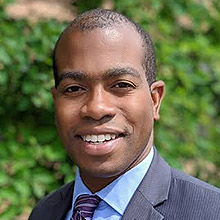
Louis Brown is an attorney, lecturer, and the Executive Director of Christ Medicus Foundation, a Catholic healthcare non-profit where he leads efforts to promote religious freedom and the dignity of life, while expanding access to Christ-centered health care. In 2017, he was appointed to the US Department of Health and Human Services office for Civil Rights, working to enforce federal civil rights protections for patients. Following law school, he worked in private practice labor law and commercial litigation. He also worked as a congressional staffer on Capitol Hill, serving as legislative counsel and liaison to the US House Committee on the Judiciary, advising on healthcare, the Affordable Care Act, and Medicare. He frequently speaks and writes about the intersection of faith, healthcare, public policy, and the common good. He received a Juris Doctorate from Howard University School of Law in Washington, D.C. and he holds an undergraduate degree from Michigan State University.
The following transcript is machine generated.
| Ashley | Welcome to conversations with consequences. I'm your host, Ashley McGuire. |
| Betsy | And I'm Betsy Fentress. |
| Ashley | And we are so excited to have back with us Father Thomas Pietri, one of the many Dominican friars we turn to when our culture seems to really go awry, which is basically always. Father Petri spent years at the Dominican House in Washington, D.C., and he's a familiar face and voice on EWTN and is currently back in his home state of Kentucky, serving at Saint Louis Bertrand Church. And he's also a missionary of mercy. And father, with it being All Souls Month and also National Vocations Awareness Week, we are so thankful to have you on the show again today. |
| Father Thomas Petri | It's always good to visit with you, Betsy. Actually. |
| Ashley | So far. I have a little funny. Anecdote which is my five year old. The other day we were getting out of the car and he said to me, can we go to a cemetery because it's November? And I was kind of stunned because he's five and my older kids are more aware about, you know, the month of November and praying for the dead. But then a little bit later, I have been working on these reading sticker charts with him where at the end of a certain number of days where we read together, he gets a reward. And I said, what would you like your reward to be? And he just goes, Cemetery. |
| Father Thomas Petri | That's great. |
| Ashley | So I thought. Wow. My five year old is more dialed in on this than I am, but can you tell us about why, why cemeteries are so important as we mark in the month of November, and especially having just finished with All Souls Day? |
| Father Thomas Petri | Well, you know, first I'd want to say just for the Middle Ages, we'd be banging down your door to already admit your five year old to to the Order of Preachers. |
| Ashley | So his name is Dominic. |
| Father Thomas Petri | So I'll say I'll. I'll keep that paperwork handy in my desk for, you know, about, 13 years from now. We'll we'll work that out. Yeah. November is traditionally been the month we pray for the deceased. Of course, everybody's aware that November 1st is All Saints Day, but second is All Souls Day. We pray for the dead. Not because, you know, we doubt God's mercy. It's actually because we trust in his mercy. Right? And we know. And as Catholics, we believe that to be with God for eternity is complete happiness, complete joy. And there is nothing of shame or guilt or embarrassment about the sins that we committed in life or the grudges that we still have. You know, we die. The persons we are at the moment of our death. We don't magically turn into somebody else. We don't turn into angels. Despite the hallmark cards that suggest as much. Right? We we walk into death with all the baggage that we had at the moment. And purgatory is because of God's mercy. It's the place where all of those attachments are purified, are cleaned away, and we pray for the dead because they are no longer able to pray for themselves or do works of penance to help in their own purification. So we do that for them, remembering that death is not a barrier because Christ has crossed from life to death, he now is the gateway between life and death. And so even when people that we love die, and even if they die tragically, we know that hope is not lost and that our relationship remains with them. So praying for the dead is a particularly good thing, not just for them, but also for us. You know, both my parents are deceased, and there are certainly things I wish I would have told them before they died. But praying for them for many years now, I am I am reasonably certain that they're aware of my love, and I am certainly aware of theirs. |
| Betsy | So we also mark All Saints Day just before All Souls, and you had a chance to, a couple of years ago to to preach in the presence of the skull of Saint Thomas Aquinas. What was that like? And what were some of the salient points that you wanted to make in front of this relic? |
| Father Thomas Petri | Well, it was an amazing time. We were celebrating the jubilee of Saint Thomas Aquinas. It was the 800th anniversary of his. I always get it. It was 750 years. Everything in Saint Thomas life happened in 50 year increments. It was the 50th, 750th anniversary of his candidacy. The 800th anniversary of his death and the 850th anniversary of his birth, all in the same two year period. And so his skull, from Toulouse, was traveling the United States, and we had his skull at the Dominican House of studies for a day. And I got to preach the mass, which was very wonderful, just to be in the presence. And it reminds you, you know, this whole thing about relics. I know sometimes Catholics are non-Catholics. Look at us Catholics and think we're strange or weird because we seem to have this fascination with bones. I think that kind of came up when they when they displayed blessed Fulton Sheen's jawbone, you know, during the mass. That's a that's a little. Wow. But, you know, we believe that the body is important and that we are not it's not simply just a shell or a suit that the soul is wearing in life that we are we are unique creatures in God's creation, and we are both created. We are both material with a body and immaterial with an immortal soul. Which means that that skull, particularly Saint Thomas Aquinas, you know, that skull, his brain, everything about, you know, his his genius and everything materially was present in that skull. And so it's really a remarkable experience. And also to know when we see relics, whether they're just little slivers of bone or whether there are major relic like a skull or a femur or something like that, that skull, that that femur, that body is the one that is going to rise from the dead on the last day, you know, and and it is the body that Saint Thomas will have that the saints will have for all eternity in the presence of God. And there's something remarkably powerful about that to be in the presence of that, especially when you're talking about a saint like Thomas Aquinas, who had such an impact not just by His Holiness and especially because of his holiness, but because of his genius, his charismatic intelligence. There's a reason we call him the common doctor of the church. It's it's his theology that really explains so many of the mysteries that we hold as Catholics. And really, until the early 1980s, every priest was required to learn the theology of Saint Thomas Aquinas. So as a Dominican, that was a profound, profound experience. |
| Ashley | We had the. Honor of interviewing Bishop shortly before the beatification, and he actually talked about big zooming the body and having to decide which, bones to choose for the relics. And that was one of the trippier conversations I feel like we've ever had on conversations with consequences. But, you know, I'm a convert, and that was one of the things that I was kind of like, yeah, I'll figure this out later about the whole relics, but I've really come to appreciate the how they are a, a concrete connection between us to the saints. But you wrote in an article for National Catholic Register on this topic about the soul and the body. You said we don't believe the body is merely incidental to who we are. Saint Thomas was clear the human person is not just a soul and not just a body. The human person is a composite of soul and body. The human soul is such that it needs a body. It's ordered to a body not only to learn, to remember, to think and to imagine, but to move, to communicate, to be visible, so to speak, in the world. Can you talk about, It feels like we're living in an era where there's, we're reliving heresies about the soul in the body. And I feel like this is the Dominican specialty is is is countering heresy. So can you talk a little bit about some of those modern heresies? |
| Father Thomas Petri | Well, I think modernity, it's not that the modernity emphasizes the body body too much. I think they emphasize the body too little. And that's become more obvious over the last ten, 15 years with the trans sexual ideology that is so prominent in, in many of our political discussions. I think, you know, 20 or 30 years ago, it was often claimed that the church doesn't care about the body. And, you know, this is think of the period when working out in fitness really began to take off. Especially among those who, you know, suburban moms and, and, you know, memberships to gym, gyms and work out and fitness centers. Well, you know, we're really in favor of the body and, and and and treating the body well and that's all good. I don't want to criticize that. But the body is actually more important than just physical health, precisely because, as I said earlier, we are creatures that are we're not just the body and we're not just the soul. We are a composite. That's the that's what Saint Thomas calls us. We are mixed composite, a mix of the spiritual and the material. And, you know, we need the body not just to move and to make ourselves visible and to communicate, but the soul needs the body to gather information. You know, the think of the five senses. Think of what the brain does and how we learn. You know, neurologists and neuroscientists still haven't figured out exactly how we are able to think such wonderful, universal thoughts like freedom and love and God and family and self-sacrifice and patriotism, all of those things, those aren't just in experiences that we have. Those are what Saint Thomas would call universal, permanent thoughts, you know, and but they only come because we have particular experiences. You know, Saint Thomas says the, the, the memory. He wouldn't have known about the brain as much as we know about it, but he certainly knew about memory and imagination. And all of these, we now know, is part of the physical structures of the brain. But he would say that all universal knowledge, all the big ideas we have, whether about God or love or family, all of them at at ground level, do require the body to think, you know, you at the very least, you need not just information, you need memory and you need imagination. You know, there's we are creatures who cannot think, not even the most abstract thoughts, without having images in our head. You know, when I tell people, you know, think about God, you know, people have an image, you have an image in your head. Right now, I'm even mentioning the word, whether it's an old man in light, sitting on a throne, or whether it's some image of a luminous cloud, whatever it is, that's just how God created us. Which is why, Christianity is so filled. Catholicism is so filled with images and sense experiences, bells and incense and beautiful music and beauty because Christianity isn't for us, just something that's working in the level of abstract thought. Because we don't work purely in the level of abstract thought. We work in images in our head. I'll just add this as a bit of a digression, but this is why I one of my, pet peeves is when people say, well, I need you to calm and blank your mind and, you know, and to have a blank mind that is physically, materially impossible for a human person to have a blank mind when someone tells you, I don't want you to think of anything. What do you immediately do? You. You think of a brick wall, a white wall. That's an image you don't. It's impossible for a person to have a blank mind. So the body is radically important. And we know it's radically important on faith, because we believe that all bodies will rise from the dead on the last day. So it's not just a shell. We're not just caterpillars waiting to become butterflies. The body is radically important. It's part and parcel of who we are. |
| Betsy | So it's kind of impossible to have this conversation without talking about funerals. And this week in the Wall Street Journal, or maybe it was last week. Faith bottom had a piece about the tremendous rise in cremation. So how do you think this disembodied that you're talking about in modern culture fits into that? And how do you talk to families who come in and are trying to decide between the burial of the body or cremation? |
| Father Thomas Petri | Well, that's a tricky conversation. I will admit that. Look, in one ways it's not tricky. The church says that cremation is permissible. That is a sort of a development from the late 80s, early 90s, provided that, you know, you're not spreading the ashes, you're not doing it as some sort of statement about the lack of importance or of the human body. You know? I mean, I can't tell you. I see ads on the internet of turning ashes into jewelry, you know, that you can wear around your, your neck, which think about people who keep an urn on the mantel in the fireplace. The this is not possible, right? Because it degrades the resting of the body. And I know some people always were. Well, can God raise ashes? Well, yes he can. He created everything from nothing. He could. He could raise a glorified body from ashes. And after a thousand years, even a buried body becomes nothing, you know, but ashes. However I do, it is the church's position that cremation is second best. You know that there is something about burying the body that is our preference. Now, it may not be possible in a lot of places because of lack of space for burying bodies. I know some people choose cremation because in theory it's less expensive. I don't know that that's always the case anymore. I will say, as someone who has celebrated funeral masses with both, obviously with bodies, with a casket, but also with cremated remains present at the funeral mass, I think even psychologically there's something different, you know, I can I can tell by the non-verbal of the family and the congregation at those kinds of funerals that there's a disconnect just to see, you know, a vase, essentially a fancy vase on a table versus having a casket with your, your loved one's body next to it. You know, it's a funny story. I will tell you this. My both my parents are deceased. My father, his body was buried. He died, you know, about six years before my my mother did. And my mother, you know, there was no question at that time that he was going to be buried, you know, with his in his body or his his body was going to be buried. But when she was going through the stages of life, she was insisting that, she wanted to be cremated. And I think it was simply to save money, to have more money to give to the children or to take care of expenses, which, you know, was not necessary. And she had made me the executor of of the will. And, I said to her, I said, I'm not I'm not cremating your body. I just I'm not doing that. I for me also, it's just the image of burning my mother's body, and my mother's body being burned by fire is just. I can't do that, you know? And we've been burying bodies for thousands and thousands of years, and and so she got a little upset. She said, well, but it's one of my last wishes. I said, trust me. By that time, you weren't even going to care what happens to your body. And she said, well, it's in the will. You have to do it. I said, well, not technically, I'm the executor and, and I would only have to do it if the other interested parties of your will, my siblings disputed me or wanted to take me to court for that. And that's. I know they agree with me on all all of this. You will. Your body will be buried. Mother, I'm sorry to tell you this. You know, she's in the hospital on you know, what is essentially going to be her deathbed. And we didn't know it at the time. And I and she said, well, I'm going to make your sister the executor. Then I said, oh, by all means, she's much stronger on her opinion on this, that I am, you know. Wow. So I you know, that's probably I was I would not advise that path of a conversation for everybody. But I was my mother's youngest. I was the priest. And she more or less towards the end of her life, was very, amenable to doing what I suggested when, you know, I had good reasons. So, but in the end, she sort of gave up the fight, you know, and said, well, whatever you're going to do, just do that. I, I guess you're right. I'm probably not going to care at that point. I guarantee you not going to care at that point, you know. So, yeah, I, I've told family, I tell friends, if they ask me, I tell them I prefer, you know, I think they I give them the reasons why burying the body is important because of the dignity of the body. But they do cremation, I tell them, then they they you still have to bury it or put it in a columbarium or in a mausoleum or something. You can't just spread these ashes, you know, and we have real good reasons for that. Spreading ashes suggests that the body is really unimportant. And it it's it is it is important. It's not unimportant. |
| Ashley | Well, having recently been to a Catholic funeral, a traditional Catholic funeral wake burial, I was struck by how much involvement it entailed of the priest. Not just the going through the motions, but just being emotionally available to a lot of grieving people. And it made me wonder, you know, given the article that Betsy mentioned, if you know all this conversation about a shortage of priests, you know, we're in National Vocation Awareness Awareness Week. You know, is it possible some of these trends are connected to the fact that priests are stretched so thin and that this is this is something that used to be a very big part of the ministry of priests. |
| Father Thomas Petri | Yeah, I think I you know, I hadn't considered that actually. But I think that I think one could surmise that the priests are stretched very thin. And so we see a lot of elements of the full priestly life, particularly in parish ministry, that by, by reason of it only be in one man. And, you know, we have limited time and limited energy. And, priests are pulled in a lot of different directions. I think that there is a lot of areas that, aren't getting as much attention. I think the other one, we've talked about this in the past, but confessions, you know, and being able to have more time for confessions and then just 30 minutes on a Saturday afternoon. But I think one of the beautiful things about priesthood, you know, I've been ordained for over 17 years, and priests may be celibate. We may not have our own families. But one of the wonderful things about being a priest is because we accompany so many families at all stages of life. I think we do get a sort of on the job field experience of every aspect of family life, you know, from courtship and dating to engagement, marriage to having the first children to, you know, having teenagers who are rebellious and adult children who are disappoint you or break your heart to them returning and having their own children all the way to death. And then you know what happens after death for for the surviving spouse. And I think that priests do have a wealth of experience because they've seen it play out. And, you know, I've said this about confession, but I say it also about family life. You know, we all know families are different, but we all know every family is perfect. But the amount of times I see the same issues or the same struggles pop up, you know, it's almost like it's almost like clockwork at certain times in children's life when they're certain ages and everything like that. And, and I know mothers talk about this with each other, especially when you think about the two, when they're two and when they're three and when they're starting to approach reason. It's it's amazing as a priest to be able to say, oh, I've seen this movie before, you know, this is, this is and it also is, I think, allows priests not just with death, but in everything, to offer a word of hope, you know? Yes. You know. Yes. Your your 14 year old says he's an atheist. He doesn't know what he is, you know, and Grace is still working in there, whether he realizes it or not, because you had him baptized, you know? Yes. You know, your husband who you were married for 50 years, has passed away. But you know, that doesn't break your relationship with him. It transforms it. So now you relate to him through Jesus Christ. You know, the Catechism. I'll just offer this one little nugget. The Catechism of the Catholic Church, in the section on funerals, mentions that the faithful learn to relate to the deceased through Christ and through prayer for him, particularly at the mass. And so one of the things I often like to point out to those who are grieving a lost, you know, someone who's died, who they love very much, is that, you know, when we receive Holy Communion, we receive Christ. We receive Christ's body, blood, soul and divinity. But we are receiving the whole Christ, which means not just Christ ahead. We are, in fact receiving all those who are in Christ. When we receive Holy Communion, which means we're receiving the saints, we're receiving the angels, we're receiving all those Catholics who are now living in various ways already in the body of Christ and those suffering. You know, the thing about purgatory is there is no chances for them going to hell. They are going to heaven. They know that they are going to heaven. They are closer to Christ than you and I are right now. So always like to remind the faithful that you know when you receive communion, you're not just receiving Christ. You know, I'm also receiving my parents through receiving Christ in Holy Communion. And I think having that mindset and keeping that in mind makes death less big. You know, it minimizes death, which is, of course, what we're called to do. Death. Where is your sting? Right. You know, where is your victory? And I think we the more we live that way, the less we fear death and the less we fear losing those we love to death. |
| Betsy | We just have a few minutes left. Can you give us a little synopsis of some highlights of your time in Rome? That you just were there with Teresa Tomio and Matthew Bunton? And did you get to see the Pope? |
| Father Thomas Petri | Well, it was wonderful to be in Rome. We it was a pilgrimage in the footsteps of the Pope. So we sort of traveled the path of different papal palaces, and especially how the, the concept of a conclave began, and where the first conclave, happened and Greco the first official conclave. We didn't get to see the Pope. We did have tickets. He was to have mass because, you know, it was the end of that meeting on a more slated. And so we were going to go to the mass on that Wednesday. But of course, three days, the day before we arrived in Rome, we were in Orvieto. He announced that the Angelus, the Sunday Angelus, that he was going in the hospital. So, we didn't get to see Pope Leo. But, you know, I've been to Rome many, many times, and there's just so many graces just being there, walking the streets. I mean, it's the city of the martyrs and the city of Saint Peter and Saint Paul. It's it's the city of the mother church. And so it was still there was still a lot of graces to be had for us and for the pilgrims. |
| Ashley | Well, and what wonderful news to hear that the Pope surgery was successful and that he's cancer free. And so something to be grateful for. This month, Father Petrie, where can our followers find all your articles? Follow you for insights, wisdom, and other antics? |
| Father Thomas Petri | Well, I don't have a web page, but I do. I am very active on X, formerly known as Twitter and my handle is at Petrie. Oh, PPETRIOP. And so that's. I post a lot of things there and look forward to hearing from your listeners. |
| Ashley | They're wonderful. Well, we're so grateful to have you on especially marking this month that, you know, I think can be painful for a lot of people. But I think you've given us a lot of things to reflect on that help to point us truly back heavenward, which is ultimately what those reflections are about. So, father, thank you so much for joining us today. |
| Father Thomas Petri | Thank you. It's always good to be with you. |
| Ashley | Welcome to conversations with consequences on TN radio. I'm your host, Ashley Maguire, and I'm thrilled to have back on the show a good friend and Catholic thought leader doing so much with Catholic Healthcare. Louis Brown is the executive director of the Christ Medicus Foundation, and has also worked for the U.S. Department of Health and Human Services. Welcome back to the show, Louis. |
| Louis Brown | Great to be on with you, Ashley. Thank you. |
| Ashley | It's great to talk to you. Although, it's been a it's been a whirlwind week, so there's lots for us to process. There's been, some hard election losses, but also in the state of Colorado, where you are, as well as in some other states, some interesting results on ballot initiatives with the midterms having just have having happened. And you recently penned a piece in zeal writing about the Colorado state government officials. You said they've launched a, quote, unconstitutional political attacks on families, healthcare professionals and people of faith. So can you speak a little bit to that with regards to what just happened in these midterm elections store? |
| Louis Brown | And again, thank you, Ashley, for all you're doing. Thanks for having me on. I think it's really important as we look at our, as Catholics, as we look ahead to Christmas. To recognize, to remember that Jesus is the cause of our joy. Some colleagues and I were talking about this yesterday. As we were thinking about our newsletter for Christmas. You know, for the Christ Medicus Foundation, that Jesus is the cause of our joy. And so I think for people that are dedicated to the culture of life, for folks that are practicing Catholics and understand, what it means to build a society of love and justice, I think seeing some of the election results. From last night and from the last several weeks. Leaves a lot of cause for concern. At the same time, political winds can quickly shift extraordinarily quickly. I've heard as an adult the end of the Democratic Party, the end of the Republican Party numerous times, the last 20 years. And it was never true. It's never been true. So we'll see what happens the years ahead in Colorado. We were blessed to have three ballot initiatives proposition 133, proposition 134, and proposition 135 that were all focused on protecting children in different ways. The first one, proposition 133, which has been called the Protect Children from Sex Trafficking Act. Increased penalties for the trafficking of minors. Proposition 134 increased criminal penalties. I should be specific. Proposition 134 has been called the Protect Girls Sports Act, and that essentially ensures that women's sports will be women's sports, and men's sports will be men's sports that we are going to work. In the law that we're going to have a law, state law here in Colorado, constitutional law that says that women's sports are preserved for biological women, which is just common sense. The last proposition, Ashley, proposition 135, has been called the protect children from irreversible sex change surgeries, which is just prohibiting appropriately unethical and harmful sex rejecting procedures, with additional particularities within that ballot measure. So it looks like all three of those ballot measures, which are protecting children in different ways in girls sports, protecting children from trafficking and protecting children from unethical and harmful sex, rejecting procedures in particular circumstances. It looks like those things passed with slim majorities, but nonetheless pretty remarkable that in this environment that those kind of ballot initiatives protecting children and protecting parental rights are passing in Colorado. So it is a ray of political hope even as we know that Jesus. So I'm I'm happy about that. But as you mentioned, state government officials here in Colorado for years have been really going after the family, have been going after parental rights, and have been essentially inserting themselves and disrupting the relationships between parents and children and also attacking our religious freedom. So we have a long way to go in Colorado. |
| Ashley | Yeah. Some of the post-election coverage I've seen that I've found interesting points to a break with what happened with a lot of these ballot initiatives, at the local level, from what happened sort of at the party political level. So how can you break that down a little bit? I mean, you've got the people in Colorado voting, as you've just pointed out, for these measures, sending a message that they want to protect children, they want to protect their girls, and they want to protect children, but at the same time, voting into power, not just in Colorado but elsewhere, a party that has been so decidedly, outspoken in the opposite direction. I mean, what do you make of that? |
| Louis Brown | Yeah, I think that, I think voters, you know, people have a lot going on. You're a parent of many children. I'm a parent of young children. And on a certain level, I think most people, they're just trying to make it right from day to day, week to week. And, I think folks address their voting decisions in a fairly simple manner. And I remember when President Trump, you know, was in his interview, one of his first interviews after he won reelection or was wasn't reelection, but he got his he won his second election, and it was Kristen Welker on Meet the Press. And he says. You know, he says something to the effect of, I got elected to, you know, reduced the price of groceries and help reduce inflation. And I think that and I think that that's a large part of the reason why he was elected in 2024. I think Colorado voters and voters in different parts of the country, you know, were responding to what they perceived as, you know, challenging economic circumstances. And, that allowed some voters, at least here in the state of Colorado, to vote, their pain being motivated by their economic pain, to vote on their economic pain, while also seeing some social issues that they could correct here in the state, and not seeing any type of incongruence between those two actions. So I think that's what we saw in Colorado. But it's also interesting. I think there's some instructive lessons on the way forward for people that are really concerned about life and religious liberty, human dignity and those kind of issues. |
| Ashley | I mean, one thing that's clear is that, whoever wants to win political power needs to think about, as you pointed out, where families are feeling pain. What do you view as some of the ways that either party, can type the types of policies that economically help families? Do you have thoughts on what are some of those priorities that we should be focusing on. |
| Louis Brown | For sure? And at Christ Medical Foundation, our focus is on sharing the love of Christ in healthcare and concretely building a culture of life for families, for mothers, for children, for fathers, so that they a make the decision to choose life for their baby. But b can raise their child, particularly in a health care environment, but a broader civil society that's going to embrace and foster and encourage and love and serve, you know, the children that these parents decide to have. And so we're very concerned about, public policy that uplifts the family, particularly in health care, but across civil society. So I think that I really think Catholic social teaching, as I'm sure you do. Ashley points the way forward. You know, for our politics, for our political and social order. Part of what I wrote about is a new vision for not just Colorado, but really for the country in which we say we are going to restore God, given you the dignity, the equal and civil rights of all people. Those rights that are legitimate, those rights that are based on the natural law, and ensuring that we as a country, as a civil society, in our law and public policy, but also in our political and social order that we provide for the legitimate economic and social needs of our people, particularly working class families. So, you think of policies such as paid. Paid family leave. Right? Other economic policies that make it as a affordable and reasonable as possible to ensure that children are encouraged, children are celebrated, and parents have appropriate economic incentives to bring their child into this world and to have more children. So I think economic policies at the state level and at the federal level, that can really favor the family, that can really incentivize parents to not be afraid to have children to to say yes to life in, in challenging circumstances. I think that's really important. And I think there's some agreement on both sides of the aisle on doing just that. |
| Ashley | Pro-lifers were watching a few other ballot initiatives, one in the state of Virginia that unfortunately passed, that enshrines right to abortion all the way through the entire pregnancy, now making it one of the most, permissive states on the issue of abortion and also the state of Missouri hoping to reverse their constitutional amendment that had done that. What are your thoughts on, you know, I mean, I guess I'll just say my initial reaction is it's it's hard to see people voting about the price of gas, but at the same time not caring about vulnerable, innocent human life. I mean, what are your thoughts about where the pro-life movement stands after those two kind of tough losses at the ballot level? Ballot initiative, ballot initiative level for pro-lifers? |
| Louis Brown | No. It's a great question. We need to continue to defend life with maximum determination of Saint John Paul to would tell us. But as David Bright said in a remarkable speech. To, you know, at the ADF summit this past summer, we need to work to change culture long term. Yeah, we need to work to change culture. I think David Bright's work at Life Leadership Conference is really leading the way on how on looking at how do we change culture. And that's going to be a long term fight. You know, when we think about politics, 2008. Barack Obama had a landslide victory. You know, 60, 60 votes in the US Senate. And, you know, supposedly the Republican Party was over two years later, 2010, a year in which states were redistricting. There's their state legislature and their state. Their congressional delegation, 2010 Republicans had the largest, one of the largest victory in Republican Party history. You know, these things go back and forth, right? And I think even on ballot measures. Right. It seemed as though for the first two, you know, first couple years after the Dobbs decision that it, you know, when are we going to get a state level win on, on life issues? And then finally Nebraska got across the line and also Florida defeated an important, you know, very bad pro-abortion initiative, even though they they, they beat it by keeping the number in favor of the initiative under 60%. But we need to take the short term view and the long term view. Let's change culture. Let's evangelize as Catholics. Let's preach the gospel which is above the political order and above party. And let's build a civilization, a society, a culture of love and justice. In our personal communities, in our state, and in our nation. The last thing I'll say, Ashley, is. That might sound like buying the sky. But when we're talking about building culture, I have an amazing wife. And I know your amazing husband would say that you're an amazing way to. And my amazing wife. She changes culture. She's part of two different moms groups. She's leading one at her parish. She's also part of another one called moms on a mission. She's changing culture. I have a friend here, that leads a Bible study, leads multiple Bible, Bible studies. A wonderful man, Steve Paul, here in Colorado. He's changing culture by doing that. Each of us has what Saint Joseph would say is a personal apostolate where we are bringing love and care. We are bringing the heart of Jesus. We have the opportunity, at least, to bring the heart of Jesus into every environment in which we enter into. If we have ten, 15 million Catholics that are really taking that seriously by bringing the love of God into their communities, even at a micro level, that changes culture. It only took 12 apostles to change the world. And so the Lord's giving us an opportunity to do that. This is a real suffering we're going through, I think, because of these elections results with such a pro-abortion, you know, U.S. Senate now and pro-abortion culture of Congress. But there's an extraordinary opportunity ahead for Catholics and for people of goodwill. |
| Ashley | Amen. Well, speaking of Catholics in your state, the Supreme Court earlier this week heard oral arguments in a case involving Catholics in Colorado, specifically a universal, supposedly universal preschool program designed to do exactly what we've been talking about to help families where they need it, which is the cost of childcare, the cost of education, supposedly qualifying every Catholic child for up to $6,000 in tuition aid. The only issue was Catholic schools are excluded because of their teachings on gender and sexuality and marriage. So this this case has gone all the way. Saint Mary V Roy has gone all the way to the Supreme Court. What are your thoughts as a Colorado on that case? Do you know people who have been impacted by I mean, you yourself are a parent of closing in on preschool age children. So what are your thoughts on that case? And and what do people on the street in Colorado think? |
| Louis Brown | Yeah, the case is very important. I live here in Colorado. I have two children. I just dropped my daughter off at her preschool, which is down the street. It's a Christian preschool about ten minutes away from us in Littleton, the same city as Saint Mary's, parish. I go to Saint Mary's parish generally for confession. It's just 12 minutes away from me, and I've met one of the families that's directly involved in the case. The Shealy family. The husband is actually patrols. He's a police officer and actually patrols in my neighborhood sometimes. So it's very personal. What the state of Colorado has done is relentlessly attacked religious liberty, attacked faith communities, attacked religious nonprofits, attacked parental rights, and really attacked the anthropology of the person. You know what it takes to to really flourish. And it's and the state has been relentless in pushing their pro-abortion, pro gender ideology, on the people of the state. And they've been hijacking and weaponizing nondiscrimination law to do it. We need nondiscrimination law. We need civil rights laws, but it needs to be based on the natural law, and it shouldn't be hijacked for a social agenda. So this case is very important, what the Colorado state government has been saying, including in this situation where the state is excluding Catholic schools from their universal pre-K program. They have been saying that, if you don't buy into our, our particular viewpoint on marriage, on sexuality or abortion, we don't want you in your state. You're not welcome here and we're not going to protect you. That's the reality. It's the stark reality. And but for the Supreme Court, the US Supreme Court bailing out our state in the masterpiece. The masterpiece bakeshop case involving the baker Jack Phillips. But for the Supreme Court, acting in the 303 creative case, protecting the free speech rights of the of the web designer. In that case. But for Charles V Salazar, which protected the free speech rights of a mental health counselor in Colorado. But for the current makeup of the Supreme Court. Free speech and religious freedom would barely be on life support in the state of Colorado. And so it's really real. This case is really important. I'm hoping that the justices are going to find that, this is an unconstitutional action for the state of Colorado to exclude Catholic schools from its universal pre-K program. I certainly would welcome the opportunity to use, the, you know, the equivalent of the $6,000 for my two children. It would directly affect us next year. And we we need to get back to the Constitution, the rule of law and God given human dignity and rights for everyone and away from the state enforcing its viewpoint on my family and other families here in the state. |
| Ashley | As an attorney, do you? Did you follow the oral arguments? Do you have a just a any kind of a tea leaves? Read on where you think the case should go? I mean, I think a lot of people are like, how many times do we have to litigate the issue of excluding, religious schools from universal programs? I'm thinking back to Trinity Lutheran. I mean, haven't we already have we already established that if it's a universal benefit, you can't exclude, faith based schools? |
| Louis Brown | Right, right. And then I would even add to that. How many times, like, at what point are states like Colorado or states like New York? At what point are they going to learn their lesson? You know, some of these religious liberty and free speech cases aren't five, four decisions. Some of them are eight one decisions or seven two. You're getting some of the justices appointed by Democratic presidents actually saying no, the state, the you know what, you know, take your state. They didn't deal with the free speech of religious liberty rights correctly. I'm going to rule with the majority on this one. So, I don't I don't know what's what it's going to take, except for changing, except for evangelization, changing culture and and eventually changing our politics. We need real political leaders that are all about the common good of all people. And there's a spirit of domination. There's a spirit of control. There's a spirit of revenge that's out there right now in, in the, in the age. Right. And in the age in which we live in, in the zeitgeist. And it's very bad. And I hope that we can overcome that through prayer and fasting and labor and love. |
| Ashley | Well, let's go back to the topic that we started out with, which is, the election and the pain, the people voting based on their economic pain. And I think nobody would deny that one of the greatest sources of economic pain for families, which has been just increasing at a kind of alarming rate, is the cost of health care. You know, I, I'm now seeing people on social media saying things like, they just aren't buying health insurance anymore and kind of crossing their fingers because, you know, families are looking at several thousand dollars a month premiums, followed by, you know, tens of thousands of dollars worth of annual deductibles. And so you are working in this field and working in a very creative and innovative way. What are your thoughts? Well, first of all, for our listeners who have not heard of your organization before, tell us about CMF and then your your thoughts on how do we address the the cost of health care for American families? |
| Louis Brown | Sure. So the Christ Medicus Foundation, our mission is to share the love of Christ in healthcare by establishing that Jesus is really the center of our health care. He's the divine physician. We do that. Ashley, number one, by defending life, religious liberty and human dignity and health care law and policy in Washington and state capitals and legislation. Occasionally filing amicus briefs. But then also, secondly, we offer we provide Christ centered health and wellness services to individuals, to families, to employers. Building up a pro-life ecosystem of care for families, employers, employers in different parts of the country. So that's our work. I would say, you know, the the cost of health care is too high. The Affordable Care Act, commonly called Obamacare, is seriously broken. There's a few different things that I, I would suggest that our country really look at to take down the cost of, of health care. The first thing is to incentivize direct primary care, where we're essentially removing the middleman, a middle woman, and allowing, you know, providing, the financial support and the programs such that patients can directly go to doctors. Patients can directly go to to mental health professionals. And incentivizing what's called direct care, direct primary care, direct mental health care. I think that's really important. Number two, I think instead of requiring people to participate in the Affordable Care Act, to receive subsidies, government support from, you know, to to purchase health insurance. I, I would like to see Congress, state legislatures. Give tax credits back to consumers, to individuals, to families. Give money back. Give tax money back to families so they they can go out and purchase the health care of their choice, whether it's on the exchanges or in the private market. Government has gotten way too involved with health care, and in many circumstances, they've made it worse. And so giving dollars back to families, giving tax dollars back to families so that they can afford to pay for whatever health insurance or health sharing or health care that they want, I think is absolutely ideal. I think the third thing I'd like to see, Ashley, is for us to have to really open up, the free market so that we have greater competition between health insurance companies and other types of health care programs. I would also really like to see people look at programs like, like health sharing, as an alternative to insurance. It's not health insurance, but it's a good, affordable alternative for a lot of families. And then looking at programs like what we're doing at Crisis Medicus Foundation, which, you know, some of our services are not at all tied to health sharing, but just allowing people to live their faith in their health care. So really bringing down the cost, returning some of our tax dollars to families that really need it to pay for their own health care. I think those are some of the things that we need to do and incentivizing, and supporting groups like Christ Medicus Foundation and others to provide more care. I don't know, cost. That's really important. |
| Ashley | Well, you know, one of the many things I admire about you, Lewis, is that you're actually, you're actually getting in there and doing something concrete about solving these issues in a way that helps families, that meets their needs where they are, and also with a Christ centered message. Where where can people find out about your about Christ Medicus and, and just follow you and your work more broadly? |
| Louis Brown | Thanks, Daschle. No, thank you so much. So folks can go to Christ, the Medicus christnedcs.org Chris medicus.org. Please get on our newsletter. If the Lord moves you, join one of our programs. We'd love to serve folks that are listening or watching, but just great to be with you, Ashley. You have a substantially, impacted my career and your wonderful Catholic leader. I really believe that you and Brian both have great to be unimproved. |
| Ashley | Thanks, Lewis. Thank you so much. |